Preparing for a Case Management Hearing

- Duration
- 17 minutes
- Format
- Video
- Template
- Included
Written by Julia Gidney · former leading employment lawyer.
Purchase a single Video Guide or Purchase all 12 guides for £299 · save £76.88
▸ Read the video transcript
If a Case Management Hearing, or discussion, is the next stage in your Tribunal claim, you'll want to know how best to prepare for it.
This is the stage where your Tribunal case gets organised, and it is an important part of achieving the outcome you seek.
One of my favourite avatars, Ada, will guide you through the information I have prepared, including how to complete your Case Management Agenda, and how to prepare and agree the all-important List of Issues.
The agreed list of issues sets the framework for your whole claim. It shapes the disclosure exercise, the agreed bundle of documents, witness statements, and submissions to the Tribunal. It sets out the questions the Tribunal must answer in reaching a decision on your case.
The video also comes with a template List of Issues to help you with this.
As with all my Videos, this isn't legal advice, just guidance that's intended to be helpful for claimants.
What This Video Guidance Covers
Your first formal step in the Tribunal process. Learn what happens at a Case Management Hearing, what the Tribunal expects from you, and how to prepare so you walk in ready.
Content includes:
- 1 The purpose and importance of a Case Management Hearing
- 2 The Tribunal notification - its importance
- 3 How to complete the Case Management Agenda Form
- 4 How to complete the List of Issues
- 5 What to plan for
- 6 What to bring to the hearing
- 7 The Tribunal orders to expect (and to influence)
- 8 The downloadable sample issues template
Good to Know
Who is this video for?
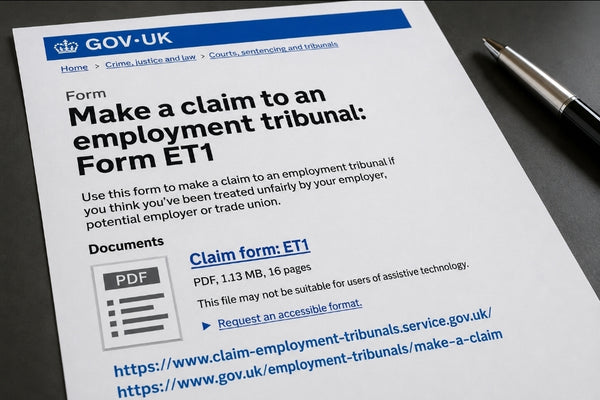
Anyone with an Employment Tribunal claim in England & Wales who has been told a preliminary hearing for case management is being listed, or who has submitted their ET1 and wants to be ready for the next stage.
What's included?
A 17-minute video explaining why Case Management Hearings happen, what the Tribunal's notification will ask of you and how to complete the Case Management Agenda and the all-important List of Issues. It walks through what to plan for beforehand: documents, witnesses, hearing dates, time estimates, adjustments, mediation and hearing format, then covers what to bring on the day and what the Tribunal's Orders afterwards will mean for you.
What templates come with it?
Two downloadable documents: an example Case Management Agenda, so you can see what the form looks like before yours arrives, and a template List of Issues. The template sets out the legal and factual points the Tribunal has to decide for all the main claim types, including unfair dismissal in its various forms, discrimination, whistleblowing, harassment, victimisation, holiday pay and unauthorised deductions, plus the remedies wording for each. Please note: this is guidance, not legal advice.
I've just received a hearing letter and the Agenda is due back soon. Will this help me?
Yes. The video is built around the decisions you need to make before returning the Agenda and it's designed to be watched before you fill in the form.
Does it cover the bundle, witness statements and mediation?
Only as far as you need to plan for them at this stage. Preparing documents, preparing witness statements, and resolving claims without a hearing are each covered in their own videos in the series.
Is it up to date?
Employment law, the Acas Code and Tribunal rules change regularly. We monitor these changes closely and update our videos when they happen. If we update this video, the new version appears in your personal video dashboard automatically, at no extra cost.
How long will I have access?
Employment Tribunal cases can take a long time to reach a hearing, so your video stays available to you for 24 months. If you need longer, just email us at info@wdidi.org and we'll extend it for you. We want you to have our guidance for as long as you need it.
Is this legal advice?
No. None of our guidance is legal advice. If you need advice on your own case, please contact a solicitor or other qualified representative. The Law Society's Find a Solicitor service is a good place to start — or your local Citizens Advice if cost is a concern.
Anything else?
More questions? Our full FAQ is here.